
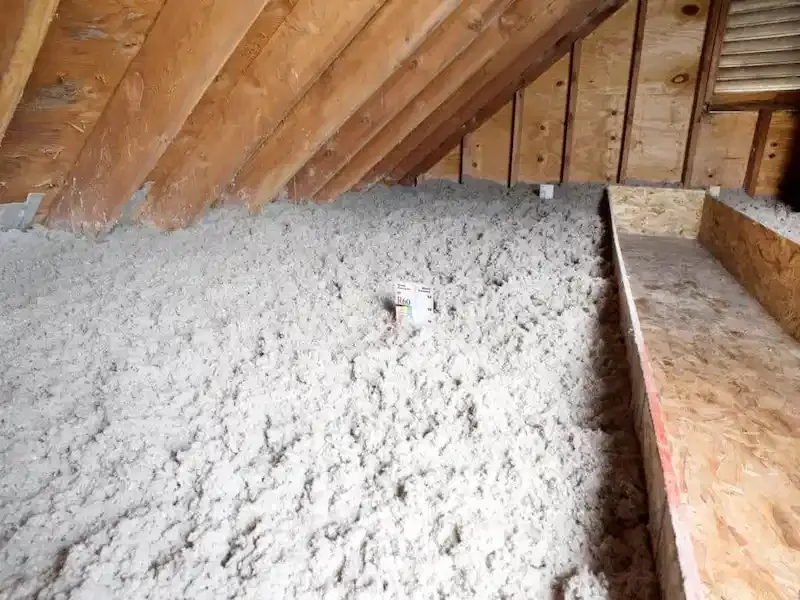
If you are upgrading the insulation in your NYC home, you have probably run into the same question every homeowner asks: should I go with cellulose or fiberglass? Both are solid choices, but the right answer depends on your home, your budget, and where the insulation is going.
We install both types across all five NYC boroughs, and we have seen firsthand how each performs in older Queens row houses, Brooklyn brownstones, and Bronx multi-family buildings. This guide breaks down the real differences between cellulose, fiberglass, mineral wool, and spray foam insulation so you can make the right call for your home.
NYC homeowner tip: If your household qualifies for New York State's EmPower+ program, you may be eligible for insulation upgrades at no cost to you. NY Energy Project is a participating contractor in the EmPower+ program. Check if you qualify here.
Quick Comparison: Cellulose vs Fiberglass vs Mineral Wool vs Spray Foam
Before we get into the details, here is a side-by-side comparison of the four most common insulation types used in NYC homes:
| Factor | Cellulose | Fiberglass | Mineral Wool | Spray Foam |
|---|---|---|---|---|
| R-Value per Inch | 3.5 - 3.8 | 2.2 - 2.7 (batts) / 3.1 - 3.7 (blown) | 3.3 - 4.2 | 3.7 (open) / 6.5 (closed) |
| Cost per Sq Ft (installed) | $0.60 - $2.30 | $0.30 - $1.50 | $1.40 - $4.00 | $1.50 - $5.00+ |
| Fire Resistance | Good (borate-treated) | Excellent (non-combustible) | Excellent (non-combustible) | Requires thermal barrier |
| Soundproofing | Excellent | Good | Excellent | Good (open-cell) |
| Moisture Resistance | Low (absorbs moisture) | Good (does not absorb) | Excellent (hydrophobic) | Excellent (closed-cell) |
| Air Sealing | Good (dense-pack) | Poor | Poor | Excellent |
| Eco-Friendly | Best (80-85% recycled) | Moderate (20-30% recycled) | Good (recycled content) | Low |
| Best For | Attics, walls (blown-in) | Open walls, floors, ceilings | Exterior walls, fire-prone areas | Crawl spaces, rim joists |
Cellulose Insulation: What NYC Homeowners Need to Know
Cellulose insulation is made from recycled paper products (mostly old newspapers) treated with borates for fire and pest resistance. It is one of the most environmentally friendly insulation options available, with 80-85% recycled content.
How Cellulose Is Installed
In NYC homes, cellulose is almost always installed as blown-in or dense-pack insulation. A professional contractor uses a blowing machine to fill wall cavities, attic floors, and enclosed spaces. Dense packing cellulose insulation creates a tight, seamless layer that fills gaps around wiring, pipes, and framing. Something fiberglass batts simply cannot do.
This is especially important in older NYC homes. If you live in a pre-war building in Queens or a 1920s row house in Brooklyn, your walls have irregular framing, gaps, and settling. Blown-in cellulose fills every void.
Cellulose Pros
- Higher R-value per inch (3.5 - 3.8) compared to fiberglass batts (2.2 - 2.7)
- Superior air sealing when dense-packed, reducing drafts significantly
- Excellent soundproofing. Cellulose insulation for sound reduction outperforms fiberglass in most tests. If you live in a semi-attached or attached NYC home, this matters
- Most eco-friendly option with 80-85% recycled content
- Fills irregular cavities perfectly. Ideal for older NYC home construction
- Pest resistant due to borate treatment
Cellulose Cons
- Absorbs moisture. If your home has water intrusion issues, cellulose can clump and lose R-value
- Can settle over time (10-20% in some cases), reducing effectiveness in wall cavities
- Requires professional installation. This is not a DIY job
- Heavier than fiberglass. Not ideal for every ceiling application
Fiberglass Insulation: The Most Common Choice
Fiberglass insulation is the most widely used insulation in the United States. It comes in two forms: pre-cut batts (the pink or yellow rolls you see at hardware stores) and loose-fill blown-in fiberglass.
Fiberglass Batts vs Blown-In Fiberglass
This distinction matters. Fiberglass batts have an R-value of 2.2 - 2.7 per inch and are designed for open, accessible wall cavities during new construction or renovation. Blown-in fiberglass has a higher R-value of 3.1 - 3.7 per inch and can be installed in enclosed spaces, similar to cellulose.
For most NYC insulation projects where walls are already closed up, blown-in fiberglass or blown-in cellulose are the two realistic options.
Fiberglass Pros
- Most affordable option. Fiberglass batts start at $0.30 per square foot
- Non-combustible. Naturally fire resistant without chemical treatment
- Does not absorb moisture. Better for damp basements and areas prone to humidity
- Does not settle. Maintains R-value over the life of the home
- Widely available and familiar to all contractors
Fiberglass Cons
- Poor air sealing. Fiberglass batts do not stop air movement, which is a major source of energy loss
- Gaps and compression issues. Batts often get compressed around wiring and pipes, reducing effectiveness
- Lower R-value per inch (batts) compared to cellulose and mineral wool
- Irritating to install. Fine glass fibers can irritate skin, eyes, and lungs
- Less effective soundproofing than cellulose or mineral wool
Mineral Wool vs Fiberglass: The Premium Alternative
Mineral wool insulation (also called rock wool or Rockwool, after the leading brand) is made from basalt rock and recycled steel slag. It has been gaining popularity in NYC renovations, and for good reason.
Mineral wool vs fiberglass comes down to performance versus cost. Mineral wool has a higher R-value (3.3 - 4.2 per inch vs fiberglass's 2.2 - 2.7), better soundproofing, and superior fire resistance. It is also naturally hydrophobic, meaning it repels water rather than absorbing it.
The downside? Mineral wool insulation costs roughly 2-3x more than fiberglass. For a full attic insulation project in a typical NYC home, that price difference can add up quickly.
When mineral wool makes sense: If you are insulating exterior walls in a renovation, need maximum fire resistance, or want the best soundproofing between units in a multi-family building, mineral wool is worth the premium. For standard attic insulation, cellulose typically gives you better value.
Spray Foam vs Fiberglass: Is Spray Foam Worth the Cost?
This is one of the most common questions we hear: is spray foam insulation better than fiberglass? The short answer is that spray foam performs better in almost every category, but it costs significantly more.
Closed-cell spray foam has the highest R-value of any common insulation (R-6.5 per inch) and provides a complete air and moisture barrier. Open-cell spray foam is less expensive, with an R-value of R-3.7 per inch, and is excellent for soundproofing.
Spray Foam Insulation Cost vs Fiberglass
The cost difference between spray foam insulation and fiberglass is significant. For a typical NYC attic, you might pay $1,500 - $3,000 for blown-in cellulose or fiberglass, versus $4,000 - $8,000+ for spray foam. That is 2-3x the price for spray foam.
Where spray foam really shines is in crawl spaces, rim joists, and areas where both insulation and air sealing are needed in one step. For these specific applications, the extra cost often pays for itself through energy savings.
Important note: NY Energy Project does not install spray foam insulation. However, we do install cellulose, fiberglass, and mineral wool, and in many cases these alternatives achieve similar energy performance at a lower cost. If you are considering spray foam, contact us to discuss whether a different insulation type might work just as well for your project.
Best Insulation Type by Location in Your NYC Home
The right insulation depends on where it is going in your home. Here is what we typically recommend for NYC properties:
Attic Insulation
Winner: Blown-in CelluloseFor attic floors, blown-in cellulose is usually the best choice. It fills around joists, wiring, and junction boxes evenly, and it provides excellent R-value and air sealing. NYC building code requires a minimum R-value of R-49 in attics, which means about 13-14 inches of cellulose. Cellulose vs fiberglass in the attic is rarely close. Cellulose fills gaps that fiberglass batts leave open.
Walls (Existing, Enclosed)
Winner: Dense-Pack CelluloseFor existing walls where you are not opening up the drywall, dense packing cellulose insulation is the go-to method. Small holes are drilled, cellulose is blown in at high density, and the holes are patched. This works especially well in the older frame construction common throughout Queens, Brooklyn, and Staten Island.
Walls (Open During Renovation)
Winner: Mineral Wool or Fiberglass BattsIf your walls are open during a renovation, you have more options. Mineral wool batts provide the best combination of R-value, fire resistance, and soundproofing. Fiberglass batts are the budget-friendly option. What R-value insulation for exterior walls? NYC code requires a minimum of R-13 for 2x4 walls and R-20 for 2x6 walls.
Crawl Space and Basement
Winner: Rigid Foam Board or Spray FoamCrawl spaces and basements need insulation that resists moisture. Fiberglass insulation in a crawl space can trap moisture against surfaces and promote mold growth. Rigid foam board insulation for crawl spaces is a better choice. It does not absorb water and provides a continuous thermal barrier. Fiberglass vs foam board insulation: for crawl spaces, foam board wins every time.
Floors and Ceilings (Between Units)
Winner: Mineral Wool or Dense-Pack CelluloseSound insulation between floors is a big deal in NYC multi-family homes. If you need to reduce noise from upstairs neighbors, cellulose insulation for soundproofing or mineral wool are your best options. Both outperform fiberglass for acoustic insulation significantly.
R-Value Requirements for NYC Homes
New York City falls under IECC Climate Zone 4A. Here are the minimum R-value requirements for residential insulation projects:
| Location | Minimum R-Value | Inches of Cellulose | Inches of Fiberglass Batts |
|---|---|---|---|
| Attic / Ceiling | R-49 | 13 - 14 inches | 16 - 19 inches |
| Exterior Walls (2x4) | R-13 | 3.5 inches (dense-pack) | 3.5 inches (batts) |
| Exterior Walls (2x6) | R-20 | 5.5 inches (dense-pack) | 5.5 inches (high-density batts) |
| Basement Walls | R-15 (continuous) | N/A (use foam board) | N/A (use foam board) |
| Crawl Space Walls | R-10 (continuous) | N/A (use foam board) | N/A (use foam board) |
| Roof (Cathedral Ceiling) | R-30 | 8 - 9 inches | 10 - 12 inches |
What does R-value mean? R-value measures how well insulation resists heat flow. The higher the R-value, the better the insulation. In NYC's climate, proper R-values keep your home warm in winter and cool in summer, directly impacting your energy bills.
Insulation Cost Comparison for NYC Homes
Here is what you can expect to pay for professionally installed insulation in the New York City area. These prices include labor and materials:
| Insulation Type | Cost per Sq Ft (installed) | Typical Attic (1,000 sq ft) |
|---|---|---|
| Blown-in Fiberglass | $0.80 - $1.50 | $800 - $1,500 |
| Fiberglass Batts | $0.50 - $1.20 | $500 - $1,200 |
| Blown-in Cellulose | $1.00 - $2.30 | $1,000 - $2,300 |
| Mineral Wool Batts | $1.40 - $4.00 | $1,400 - $4,000 |
| Open-Cell Spray Foam | $1.50 - $3.00 | $1,500 - $3,000 |
| Closed-Cell Spray Foam | $3.00 - $5.00+ | $3,000 - $5,000+ |
NYC homeowners: You may qualify for insulation at no cost through EmPower+
New York State's EmPower+ program covers the cost of insulation upgrades for income-eligible homeowners and renters. NY Energy Project is a participating contractor in the EmPower+ program serving all five NYC boroughs.
Frequently Asked Questions
Which insulation is better, fiberglass or cellulose?
For most NYC homes, cellulose is the better choice. It has a higher R-value per inch, provides better air sealing (especially dense-packed), and offers superior soundproofing. The main advantage of fiberglass is lower cost and better moisture resistance. If your home has moisture issues, fiberglass may be the safer option.
Is spray foam insulation better than fiberglass?
Spray foam outperforms fiberglass in R-value, air sealing, and moisture resistance. However, it costs 2-3x more. For most attic and wall insulation projects, blown-in cellulose or fiberglass delivers excellent performance at a fraction of the cost. Spray foam is most cost-effective for specific areas like crawl spaces and rim joists.
Is mineral wool insulation worth the extra cost over fiberglass?
Mineral wool vs fiberglass comes down to priorities. Mineral wool has a higher R-value, better fire resistance, and superior soundproofing. It costs roughly 2-3x more. It is worth the extra cost in exterior wall renovations, fire-rated assemblies, and multi-family buildings where sound transmission matters.
What R-value insulation do I need for exterior walls in NYC?
NYC code requires a minimum of R-13 for 2x4 walls and R-20 for 2x6 walls. For attics, the requirement is R-49. Both cellulose and fiberglass can meet these requirements when installed at the proper thickness.
Can I get insulation at no cost in NYC?
Yes. New York State's EmPower+ program provides insulation upgrades at no cost for income-eligible households. The program covers cellulose, fiberglass, and other energy efficiency improvements. NY Energy Project is a participating contractor in the EmPower+ program and can help you determine if you qualify. Check the income requirements, read our EmPower+ FAQ, or find out if EmPower+ is legit.
Does cellulose insulation reduce noise?
Yes. Cellulose insulation for sound reduction is one of its biggest advantages. The dense, fibrous structure of cellulose absorbs sound waves more effectively than fiberglass. Dense-pack cellulose in walls between rooms or between floors can noticeably reduce noise transmission, which is especially valuable in attached homes and multi-family buildings throughout NYC.
What is dense-pack cellulose insulation?
Dense packing cellulose insulation is a technique where cellulose is blown into wall cavities at a higher density (3.5 lbs per cubic foot or more). This creates a tighter fill that resists air movement and settling. It is the preferred method for insulating existing walls in older NYC homes without removing drywall.
Is fiberglass insulation good for crawl spaces?
Generally, no. Fiberglass in crawl spaces can trap moisture, sag over time, and promote mold growth. Rigid foam board insulation or closed-cell spray foam are better options for crawl spaces because they resist moisture. If you have a crawl space that needs insulation, contact us for a no-cost assessment to determine the best approach.
The Bottom Line: Which Insulation Should You Choose?
For most NYC homeowners upgrading existing insulation, blown-in cellulose is the best overall choice. It delivers the highest R-value per dollar, fills irregular cavities in older homes, provides excellent soundproofing, and is the most environmentally friendly option available.
Fiberglass is a solid budget-friendly alternative, especially for open-wall projects and areas where moisture is a concern. Mineral wool is the premium choice for renovations where fire resistance and soundproofing are top priorities. And spray foam, while the highest-performing option, is usually best reserved for crawl spaces, rim joists, and specific trouble spots rather than whole-home insulation.
No matter which insulation type is right for your home, proper installation is what makes the biggest difference. Poorly installed insulation, even expensive insulation, will underperform. That is why working with an experienced insulation contractor matters.
Related Articles
- Cellulose Insulation Services in NYC
- Blown-in Insulation for NYC Homes
- Attic Insulation in NYC
- Wall Insulation Services
- Home Energy Audit in NYC: What It Covers and How to Get One
- EmPower+ Program Overview
Ready to Upgrade Your Home's Insulation?
NY Energy Project installs cellulose, fiberglass, and mineral wool insulation across all five NYC boroughs. We also help qualified homeowners access the EmPower+ program for no-cost upgrades. Schedule your no-cost energy assessment today.
