
If you own a home in New York City, you have probably noticed something: your energy bills keep climbing, but your comfort stays the same. Rooms that are freezing in January and sweltering in July. A furnace that runs nonstop without warming the house evenly. Drafts you can feel near windows, doors, and baseboards.
The problem is rarely one thing. It is usually a combination of air leaks, missing insulation, aging equipment, and building quirks that are invisible unless you know where to look. That is exactly what a home energy audit reveals.
This guide covers everything NYC homeowners need to know about energy audits: what actually happens during one, what it costs (and how most NYC homeowners can get one at no cost), and what to do with the results.
What Is a Home Energy Audit?
A home energy audit is a top-to-bottom inspection of how your home uses and wastes energy. A trained technician uses diagnostic tools to find problems that are impossible to spot with the naked eye, then gives you a clear picture of where your energy dollars are going and what to fix first.
It is not a quick walkthrough or a sales pitch. A proper audit takes two to three hours and involves real testing: measuring air leakage, scanning walls with thermal cameras, checking combustion safety on your furnace, and evaluating insulation levels throughout the house.
Think of it this way: you would not try to fix a car engine without running diagnostics first. An energy audit is the diagnostic step for your home.
Why NYC Homes Need an Energy Audit More Than Most
NYC's housing stock has unique challenges that make energy waste especially common.
Older Construction
The majority of NYC homes were built before modern energy codes existed. Many were constructed in the early-to-mid 1900s with little or no insulation in the walls, minimal attic insulation, and single-pane windows.
Building Diversity
NYC has everything from detached single-family homes in Queens and Staten Island to attached row houses in Brooklyn and brownstones in Manhattan. Each building type loses energy differently.
Extreme Temperature Swings
NYC gets both bitter cold winters and humid, 90-degree summers. A poorly sealed home works harder in both directions.
High Utility Costs
Con Edison rates are among the highest in the country. When your home is wasting 20% to 40% of the energy you pay for, the dollar amounts add up fast.
What Happens During a Home Energy Audit: Step by Step
Here is what to expect when a BPI-certified auditor comes to your NYC home.
1. Interview and Walkthrough
The auditor starts by talking with you about your home. Which rooms are uncomfortable? Where do you feel drafts? How old is your heating system? They will walk through every room, the basement, the attic, and the exterior, taking notes on the building structure, insulation visibility, and obvious problem areas.
2. Blower Door Test
The blower door test is the most important diagnostic in the audit. A calibrated fan is mounted in an exterior door and depressurizes the house. This pulls outside air in through every crack and gap, making air leaks easy to locate and measure. The result is a precise number (CFM50) that tells you how leaky your home is compared to similar homes.
3. Thermal Imaging
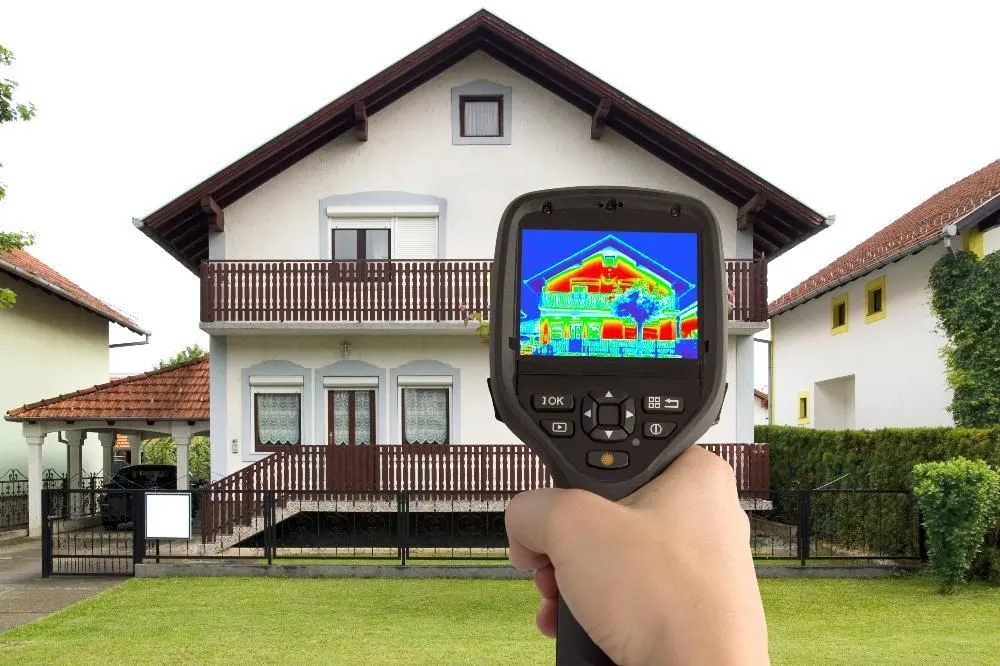
While the blower door is running, the auditor uses thermal imaging cameras to scan your walls, ceilings, and floors. The camera shows exactly where insulation is missing, where cold air is entering, and where heat is escaping. It turns invisible problems into a clear visual map.
4. Insulation Assessment
The auditor checks insulation levels in every accessible area: attic, walls (using infrared and sometimes small inspection holes), basement, and crawl space. They document the type of insulation present, its condition, its depth, and whether it meets current energy code standards.
5. Heating and Cooling System Evaluation
Your furnace, boiler, or heat pump is inspected for efficiency, age, and condition. The auditor checks the system's input and output ratings, inspects ductwork or piping for leaks, and evaluates whether the system is properly sized for your home.
6. Health and Safety Checks
This is a critical step that separates a real energy audit from a quick assessment. The auditor tests for combustion safety (carbon monoxide risk from furnaces and water heaters), checks gas line connections, evaluates ventilation in the kitchen and bathrooms, and looks for moisture problems that could lead to mold.
7. Results and Recommendations
After the testing is complete, you receive a detailed report that includes your home's air leakage rate, insulation levels in each area, photos from the thermal imaging scan, a list of recommended improvements ranked by impact and cost-effectiveness, and estimated savings for each improvement. This is your roadmap for making your home more comfortable and energy-efficient.
How Much Does a Home Energy Audit Cost in NYC?
No-Cost Audits Through EmPower+
The most common way NYC homeowners get an energy audit is through NYSERDA's EmPower+ program. If your household income qualifies, the audit is performed at no cost to you -- and so are many of the recommended upgrades. Households that receive HEAP, SNAP, TANF, SSI, or similar public assistance benefits often pre-qualify automatically.
Beyond the audit:
EmPower+ does not stop at the assessment. Income-eligible homeowners can receive insulation, air sealing, and other upgrades at no cost (Tier 1 covers up to $14,000 in improvements). Moderate-income households (Tier 3) get 50% of project costs covered, up to $7,000. Plus, the Home Electrification and Appliance Rebate (HEAR) program can add thousands more in incentives for heat pumps and other clean energy equipment.
Paid Audits
If you do not qualify for EmPower+, a paid energy audit from a BPI-certified contractor in NYC typically costs $200 to $500 depending on the size and complexity of your home. Some contractors, including NY Energy Project, offer complimentary energy assessments as part of the insulation and air sealing process. It is worth calling to ask.
What Types of Homes Are Eligible?
Energy audits are available for most residential properties in NYC. The following home types qualify:
- Single-family detached homes -- common in Queens, Staten Island, and parts of Brooklyn and the Bronx
- Two-family homes -- duplexes and side-by-side units throughout all five boroughs
- Three- and four-family homes -- the maximum unit count for the EmPower+ program
- Row houses and townhouses -- including Brooklyn brownstones, limestone row houses, and attached brick homes
- Mobile and manufactured homes -- eligible for EmPower+ if they meet program requirements
Common Problems Found During NYC Energy Audits
After performing hundreds of energy audits across all five NYC boroughs, these are the issues we find most often.
Missing or Insufficient Attic Insulation
This is the single most common issue. Many NYC homes have less than three inches of insulation in the attic when the current standard calls for 13 to 14 inches. Heat rises, and an under-insulated attic is like leaving a window open on the top floor all winter. Upgrading attic insulation is almost always the highest-impact improvement identified in an audit.
No Wall Insulation
Many pre-war NYC homes have completely hollow wall cavities. You can sometimes confirm this by touching an exterior wall in winter -- if it feels cold, there is likely no insulation inside. Wall insulation is installed by drilling small holes and dense-packing cellulose into the cavities, which also reduces air movement within the walls.
Air Leaks Around Plumbing and Wiring
Every pipe, wire, and duct that passes through a floor, wall, or ceiling creates a potential air leak. In older NYC homes, these penetrations were never sealed. The blower door test makes these leaks obvious, and air sealing them is one of the most cost-effective improvements available.
Uninsulated Basements and Crawl Spaces
Cold floors on the first level are almost always caused by an uninsulated basement ceiling or crawl space. Basement insulation keeps the heat in your living space and can reduce heating costs by up to 30%.
Old, Inefficient Heating Equipment
Many NYC homes still rely on boilers or furnaces that are 20, 30, or even 40 years old. These systems may operate at 60% to 70% efficiency, meaning 30 to 40 cents of every dollar you spend on heating is wasted. The audit will document the system's age and efficiency so you can make an informed decision about repair versus replacement.
What Happens After the Audit?
Once the audit is complete, you have a clear picture of your home's energy performance and a prioritized list of improvements. What happens next depends on your situation.
If you qualify for EmPower+, the process is straightforward: the contractor handles the application, NYSERDA reviews and approves the scope of work, and the upgrades are scheduled. For Tier 1 households, the approved work is completed at no cost. For Tier 3, you pay your share (50% of the project cost, capped at $7,000 out-of-pocket) after the work is done.
If you are paying out of pocket, the audit report helps you prioritize. Most contractors recommend starting with air sealing and attic insulation because those two improvements deliver the biggest return. You can phase the work over time based on your budget.
How to Schedule a Home Energy Audit in NYC
- 1
Check Your Eligibility
Visit the EmPower+ program page to see if your household income qualifies for a no-cost audit and upgrades. If you receive HEAP, SNAP, TANF, or SSI, you likely pre-qualify.
- 2
Contact a BPI-Certified Contractor
Make sure the contractor is BPI-certified and, ideally, a NYSERDA EmPower+ participating contractor. This ensures the audit meets the highest standards and that you can access available incentives.
- 3
Prepare for the Visit
Have a recent utility bill handy, make sure the auditor can access your attic, basement, and mechanical equipment, and be ready to discuss your comfort concerns.
- 4
Review the Results
After the audit, review the report with your contractor. They will walk you through the findings, explain the recommended improvements, and help you understand your options -- whether that is EmPower+, other incentive programs, or a phased plan on your own budget.
Ready to Find Out Where Your Home Is Losing Energy?
Schedule your no-cost energy assessment today.
Call (800) 454-1556 or visit our energy audit service page to book online.
Related Resources
Frequently Asked Questions
Is a home energy audit worth it?
Yes. A professional energy audit typically identifies 20% to 40% in wasted energy spending. For a typical NYC homeowner spending $3,000 to $5,000 a year on utilities, that translates to $600 to $2,000 in potential annual savings. The audit also uncovers health and safety issues like backdrafting furnaces or gas leaks that you might never notice on your own.
How long does a home energy audit take?
A comprehensive BPI-standard energy audit takes two to three hours for a typical NYC home. Larger homes or homes with complex systems may take longer. The auditor needs time to set up and run the blower door test, scan the home with thermal imaging, inspect insulation levels, and evaluate your heating and cooling equipment.
How much does a home energy audit cost in NYC?
A paid energy audit from a BPI-certified contractor in NYC typically costs $200 to $500. However, most NYC homeowners can get one at no cost through NYSERDA's EmPower+ program or through participating contractors who offer complimentary assessments as part of the insulation and air sealing process.
What is a blower door test?
A blower door test is a diagnostic tool that measures how airtight your home is. The auditor installs a calibrated fan in an exterior door, which depressurizes the house. This makes air leaks easier to detect and quantify. The result is measured in CFM50 (cubic feet per minute at 50 Pascals of pressure), giving you a precise number for how leaky your home is.
Will the energy audit damage my home?
No. A home energy audit is non-invasive. The blower door test uses a temporary fan mounted in a door frame with no modifications to the door. Thermal imaging is completely contactless. The auditor may move some attic insulation aside to check depth and condition, but everything is left as it was found.
Can renters get an energy audit in NYC?
Renters in 1-4 family homes may be eligible for the EmPower+ program, but the property owner must consent to any work being performed. If you are a renter, the first step is to talk to your landlord about participating. The program covers the cost of the audit and any approved upgrades, so there is no financial burden on the property owner.
Do all five NYC boroughs qualify for energy audits?
Yes. Energy audits and EmPower+ program benefits are available throughout New York City, including Brooklyn, Queens, Manhattan, the Bronx, and Staten Island. The program is administered statewide by NYSERDA, so any eligible household in any borough can participate.
What is the difference between an energy audit and an energy assessment?
The terms are often used interchangeably, but there is a technical difference. An energy assessment is typically a visual walkthrough with basic observations. A full energy audit includes diagnostic testing -- blower door test, thermal imaging, combustion safety analysis -- and produces a detailed, data-driven report. When we refer to an energy audit, we mean the full diagnostic version.
Schedule Your No-Cost Energy Audit
NY Energy Project is a BPI Gold Star certified, NYSERDA EmPower+ participating contractor serving all five NYC boroughs. We start every project with a comprehensive energy audit so you know exactly what your home needs.
