
Rigid Foam Insulation
Rigid foam boards deliver the highest R-value per inch of any insulation product. They resist moisture, prevent mold, and never lose insulating value over time. The durable, versatile solution for basements, crawl spaces, attics, and garages.
Why Choose Rigid Foam?
Rigid foam is a high-performance insulation product built for durability, moisture resistance, and versatility. Unlike fiberglass batts that sag and lose R-value over time, rigid foam boards maintain their insulating power permanently.
Foam boards shed water instead of absorbing it like cellulose and fiberglass do. They will not support mold growth or provide a home for mice, insects, and other pests. NY Energy Project installs rigid foam for basements, crawl spaces, attics, garages, and more.
Types of Rigid Foam Insulation
Not all rigid foam performs the same. We help you choose the right product for the area of your home that needs insulating.
Polyisocyanurate (Polyiso)
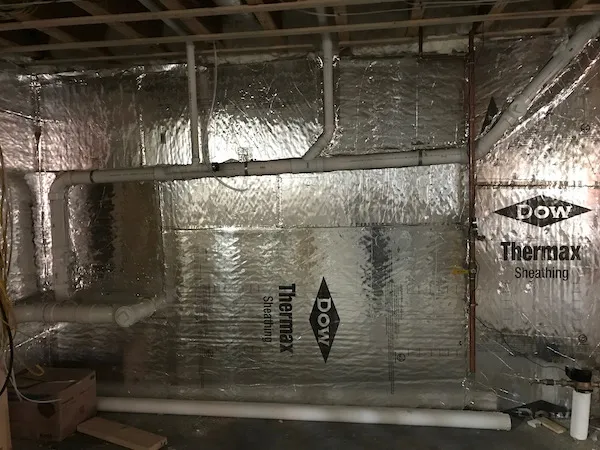
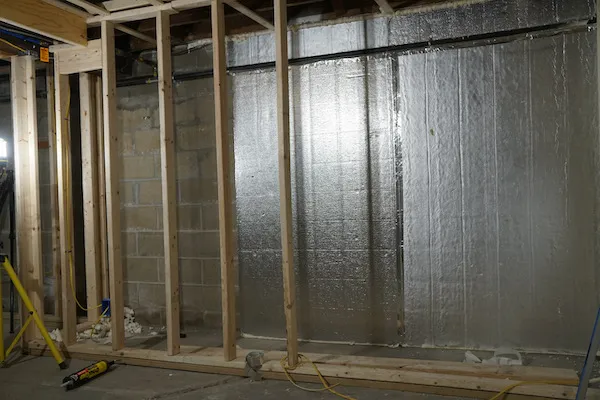
R-6.5 per inchThe highest R-value per inch of any rigid foam. Polyiso is a closed-cell board with foil facers on both sides. It works well for basement walls, cathedral ceilings, and exterior wall sheathing. The foil facing doubles as a vapor barrier, reducing moisture problems in below-grade applications.
Extruded Polystyrene (XPS)
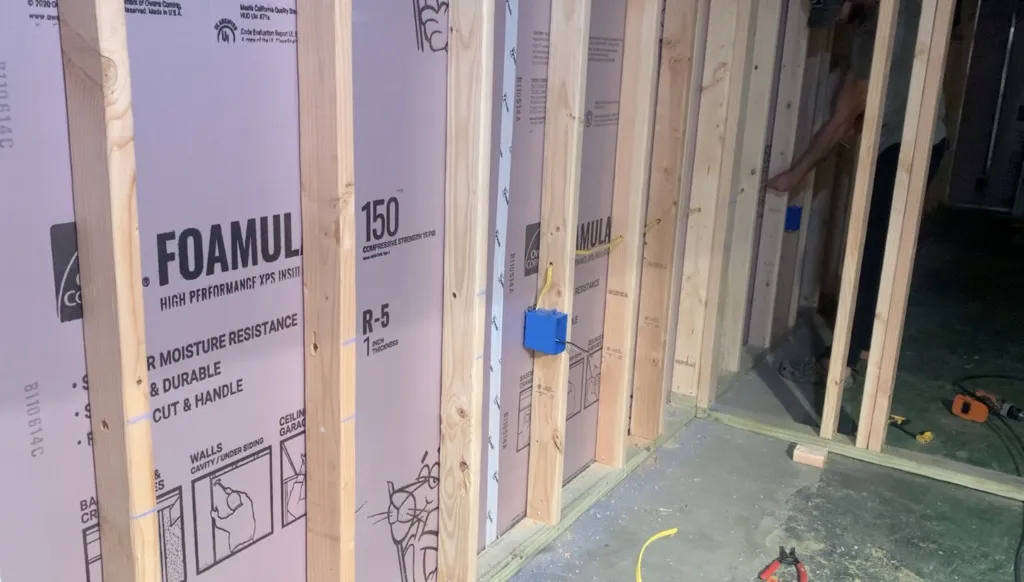
R-5 per inchA closed-cell foam board, usually pink or blue, with a smooth plastic surface. XPS maintains a consistent R-5 per inch regardless of density. Its strong moisture resistance makes it an excellent choice for foundation walls, below-grade exterior insulation, and areas exposed to water.
Expanded Polystyrene (EPS)
R-4 per inchThe most affordable and versatile rigid foam option. EPS meets or exceeds all required building and energy codes. It can be used in attics, walls, and below-grade areas. EPS is lightweight, easy to work with, and offers a solid balance of performance and value.
Why Rigid Foam Outperforms Other Insulation
Rigid foam boards solve the problems that plague fiberglass and cellulose insulation in demanding environments like basements, crawl spaces, and garages.
Never Loses R-Value
Unlike fiberglass batts, rigid foam boards will not settle, compress, or sag over time. They maintain their original insulating value for the life of your home.
Moisture Resistant
Rigid foam sheds water instead of absorbing it. Cellulose and fiberglass soak up moisture, losing effectiveness and inviting mold. Rigid foam stays dry and keeps performing.
Mold and Pest Resistant
Foam boards do not support mold growth or provide a habitat for mice, insects, and other pests, making them ideal for basements, crawl spaces, and garages.
High R-Value in Thin Profile
Rigid foam delivers more insulating power per inch than any batt or loose-fill product. This matters in tight spaces like rim joists and crawl spaces where every inch counts.
Built-In Vapor Barrier
Foil-faced rigid foam acts as both insulation and vapor barrier in a single product, simplifying installation and improving moisture control in below-grade areas.
Durable and Long-Lasting
Rigid foam will not rot, break down, or degrade. Once installed, it delivers consistent performance for decades without maintenance or replacement.
Rigid Foam Applications for Your Home
We install rigid foam insulation in the areas where it delivers the greatest performance advantage over other insulation types.
Basement Walls
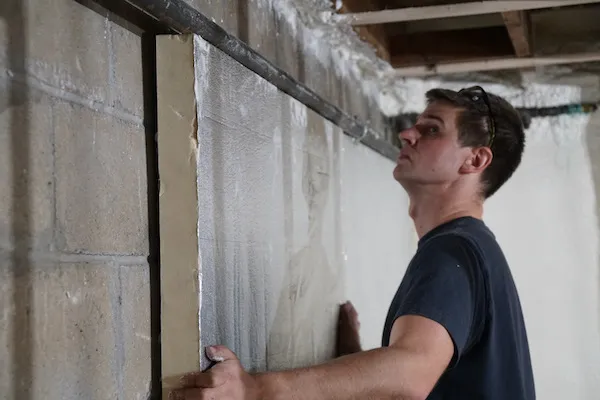
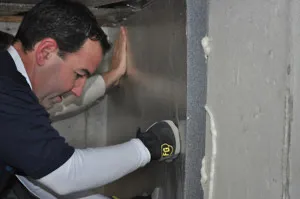
Rigid foam is the best insulation for concrete and masonry foundation walls. It will not absorb water, compress, or lose R-value in damp below-grade environments. Polyiso panels with a white foil finish brighten the space while delivering excellent thermal performance.
Crawl Spaces
Foam boards insulate crawl space walls without trapping moisture. Combined with a vapor barrier on the floor, rigid foam transforms a damp crawl space into a dry, conditioned area that improves comfort on the floors above.
Attic and Roof
Rigid foam can be installed against the roof deck in cathedral ceiling applications or layered over attic floor joists to boost R-value. It eliminates thermal bridging through framing members that batt insulation cannot address.
Garage Walls and Ceilings
For attached garages, rigid foam on shared walls prevents heat loss to the living space and blocks carbon monoxide infiltration. Foam boards on garage ceilings insulate rooms above from temperature extremes.
The Right Foam for Every Application
Not sure which rigid foam product is right for your home? We evaluate the area that needs insulating, assess moisture conditions, and recommend the product that delivers the best performance for your situation.
Schedule a free home energy audit to get a complete picture of your home's insulation needs, or request an estimate to upgrade a specific area with rigid foam.
R-6.5
Max R-Value Per Inch
0%
Moisture Absorption
BPI
Certified Installers
Free
Estimates & Audits
Rigid Foam Types Compared
Compare the three main types of rigid foam insulation to understand which is right for your project.
| Feature | Polyiso | XPS | EPS |
|---|---|---|---|
| R-Value Per Inch | R-6.5 | R-5 | R-4 |
| Moisture Resistance | Good (foil facers) | Excellent | Moderate |
| Vapor Barrier | Built-in (foil faced) | Semi-permeable | Permeable (may need separate) |
| Best For | Basement walls, cathedral ceilings | Below-grade, foundations | General purpose, budget projects |
| Compressive Strength | Moderate | High | Varies by density |
| Fire Rating | Best (thermoset) | Good with ignition barrier | Good with ignition barrier |
| Cost | Premium | Mid-range | Most affordable |
Rigid Foam Insulation Questions
Common questions about rigid foam insulation products, installation, and performance.
What is the difference between polyiso, XPS, and EPS rigid foam?
Polyisocyanurate (polyiso) has the highest R-value at R-6.5 per inch and comes with foil facers that act as a vapor barrier. XPS (extruded polystyrene) delivers R-5 per inch with excellent moisture resistance and is ideal for below-grade applications. EPS (expanded polystyrene) provides R-4 per inch at the lowest cost and works well in a wide range of applications. We recommend the right type based on the specific area of your home.
Is rigid foam insulation better than fiberglass for basements?
Yes. Fiberglass absorbs moisture, loses R-value when wet, and supports mold growth in damp basement environments. Rigid foam boards shed water, maintain their full R-value permanently, and do not support mold or pest activity. For below-grade spaces like basements and crawl spaces, rigid foam is the clear choice.
How much does rigid foam insulation cost in NYC?
Rigid foam insulation costs depend on the type of foam (polyiso, XPS, or EPS), the area being insulated, and the thickness required. NY Energy Project provides free energy audits and estimates. Many NYC homeowners qualify for rebates through the NYSERDA EmPower+ program that can significantly offset the cost.
Can rigid foam be installed over existing insulation?
Yes. Rigid foam can be layered over existing insulation to boost R-value. In basements, foam boards are typically installed directly against concrete or cinder block walls. In attics, they can be added over existing insulation on the floor or against the roof deck to eliminate thermal bridging.
Does rigid foam insulation need a vapor barrier?
Foil-faced polyiso and XPS boards already function as vapor barriers, so no additional barrier is needed. EPS is more vapor-permeable and may require a separate vapor barrier depending on the application. During your energy audit, we determine the right moisture control strategy for each area of your home.
How long does rigid foam insulation last?
Rigid foam insulation lasts indefinitely. Unlike fiberglass that sags and settles or cellulose that can absorb moisture and compact, rigid foam boards maintain their shape, density, and R-value permanently. There is no maintenance required and no need for replacement under normal conditions.
Related Insulation Services
Rigid foam works best as part of a complete home energy solution. Explore our other services.
Basement Insulation
Rigid foam is the top choice for basement walls. Learn about our complete basement insulation services for NYC homes.
View basement insulationCrawl Space Insulation
Rigid foam on crawl space walls paired with a vapor barrier creates a dry, conditioned space that improves comfort throughout your home.
View crawl space insulationSpray Foam Insulation
For irregular surfaces and hard-to-reach areas, spray foam expands to fill every gap. Compare it with rigid foam boards for your project.
View spray foam insulationRigid Foam Insulation Services Across NYC
NY Energy Project provides professional rigid foam insulation services throughout Brooklyn, Queens, Staten Island, the Bronx, Manhattan, and the surrounding areas.


BPI-certified & NYSERDA EmPower+ participating contractor
Get a Free Rigid Foam Insulation Estimate
Whether you need to insulate your basement, crawl space, attic, or garage, rigid foam is often the best long-term solution. We will evaluate your space, recommend the right product, and provide a free estimate. Call us or schedule online today.
