
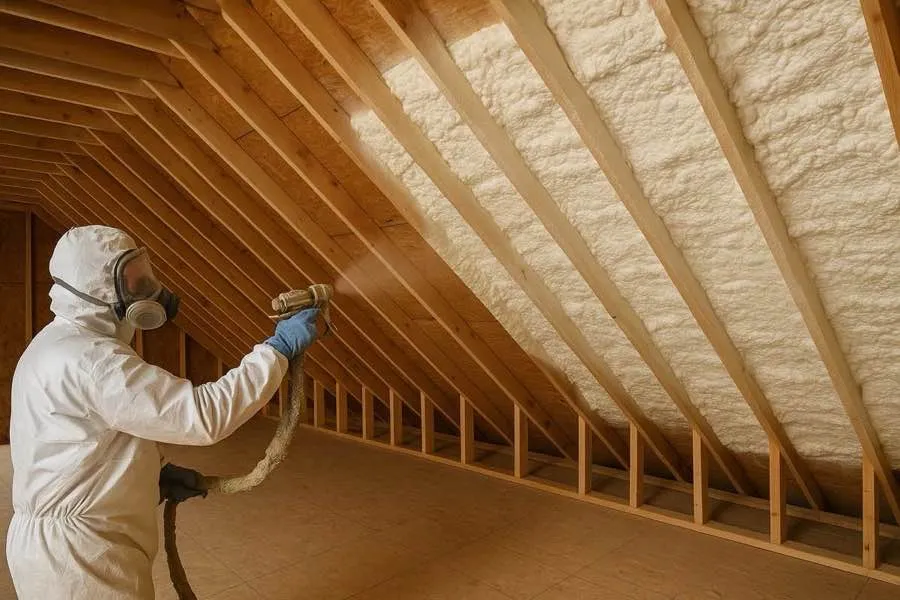
Spray Foam Insulation
The highest R-value per inch of any insulation. Closed-cell spray foam air-seals and insulates in one step, filling every gap, crack, and void for a continuous thermal barrier your home has never had.
Why Spray Foam Is the Top Performer
Home insulation has come a long way. From sawdust in walls to vermiculite pebbles to fiberglass batts, every generation brought incremental improvement. Closed-cell polyurethane spray foam is the standout of modern insulation, with properties no other material can match. It is especially effective for Brooklyn brownstones, Queens row houses, and older NYC homes that were built with minimal insulation.
As your local spray foam experts, NY Energy Project installs closed-cell and open-cell spray foam in Brooklyn, Queens, Staten Island, the Bronx, Manhattan, and surrounding areas. We are your trusted spray foam and air-sealing contractor in New York City.
What Makes Spray Foam Different
Spray foam solves the problems that hold back fiberglass and cellulose insulation. It delivers higher R-value, eliminates air leaks, and performs in wet conditions where other insulation types fail.
Highest R-Value Per Inch
Closed-cell spray foam delivers R-6.2 or higher per inch, outperforming fiberglass (R-3.2), cellulose (R-3.7), and even rigid foam boards. You get more insulating power in less space.
Air Seals and Insulates in One Step
Spray foam expands to fill every gap, crack, and void as it cures. It creates a continuous air barrier and thermal barrier simultaneously, eliminating the need for separate air-sealing work.
Waterproof (Closed-Cell)
Closed-cell spray foam has a sealed cell structure that blocks moisture migration completely. Unlike fiberglass and cellulose that absorb water and lose effectiveness, spray foam stays dry and keeps performing.
Eliminates Voids and Gaps
A 5% void in an insulated area can reduce performance by up to 50%. Spray foam expands and adheres to surfaces, making voids nearly impossible. Once cured, it will not settle, shift, or sag like fiberglass or cellulose.
Structural Reinforcement
Closed-cell spray foam adds rigidity to walls and roof decks. It bonds to framing members and sheathing, increasing the structural strength of the assembly it is applied to.
Long-Term Performance
Spray foam maintains its R-value and air-sealing properties for the life of the building. No settling, no compression, no degradation. One application delivers decades of consistent performance.
Types of Spray Foam Insulation
We select the right spray foam product based on your home's specific needs, moisture conditions, and the area being insulated.
1-Part Spray Foam (Canned Foam)
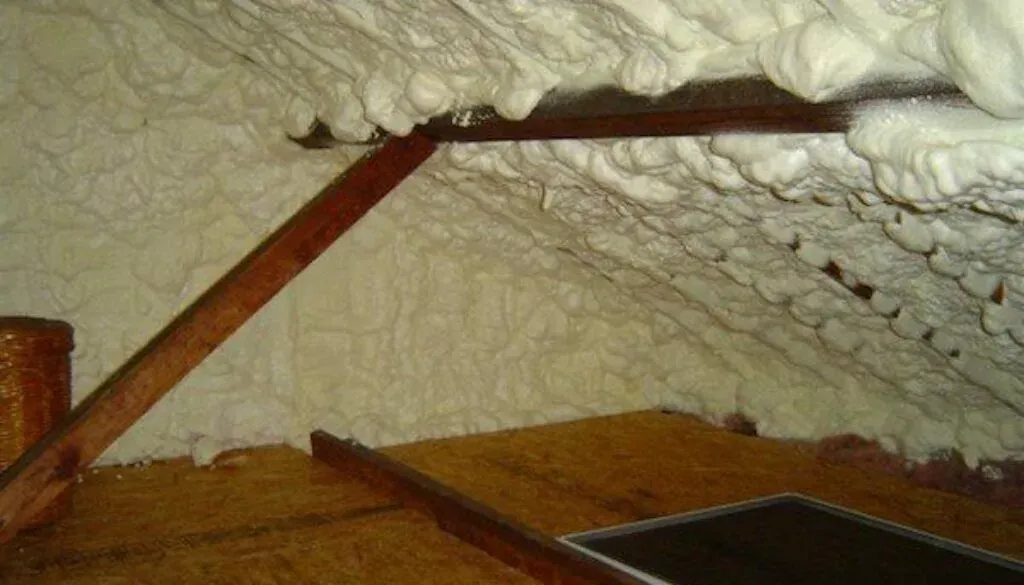
Best for: Small gaps, cracks, and penetrationsSingle-component foam sold in pressurized cans at hardware stores. It expands after application and works well for sealing small gaps around windows, doors, pipes, and electrical penetrations. Often called "insulating foam sealant" because it seals air leaks while adding insulation value.
2-Part Closed-Cell Spray Foam
Best for: Whole-area insulation for basements, attics, crawl spacesProfessional-grade polyurethane foam mixed from two pressurized containers (resin and catalyst). The chemical reaction creates rapid expansion and produces a dense, rigid, waterproof insulation layer. This is the high-performance option used for insulating entire basements, attics, crawl spaces, and rim joists.
2-Part Open-Cell Spray Foam
Best for: Wall cavities, attic rafters, interior applicationsA softer, more flexible foam with an open cell structure that allows some moisture vapor to pass through. Open-cell foam delivers around R-3.7 per inch and expands significantly more than closed-cell, making it cost-effective for filling large cavities like wall bays and attic rafters.
Benefits of Spray Foam Insulation
Spray Foam Applications for Your Home
Spray foam's expanding, adhesive properties make it the ideal insulation for hard-to-reach areas and irregular surfaces that other insulation types struggle with.
Attic and Roof Deck
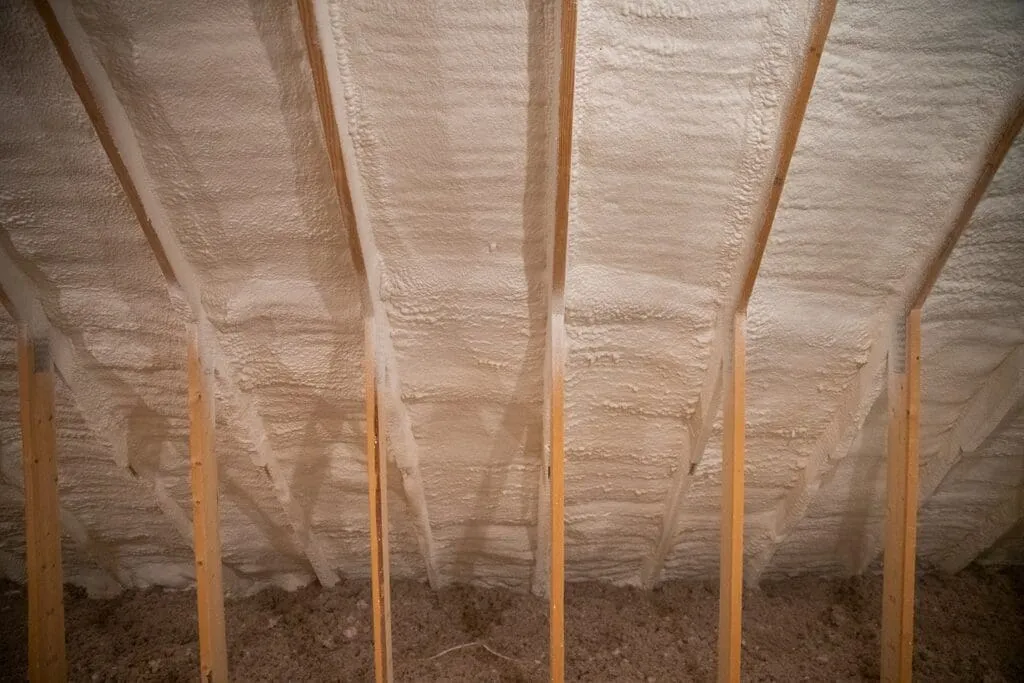
Spray foam applied to the underside of the roof deck creates a sealed, conditioned attic. This eliminates ice dams, prevents heat loss through the attic, and protects HVAC equipment and ductwork from extreme temperatures. Learn more about our attic insulation services.
View attic and roof deck servicesBasement and Foundation Walls
Closed-cell spray foam on concrete basement walls provides insulation, air sealing, and moisture protection in a single application. It will not support mold growth on damp foundation surfaces the way fiberglass batts do.
View basement and foundation walls servicesCrawl Spaces
Spray foam on crawl space walls and rim joists seals out outside air, moisture, and pests. Combined with a vapor barrier, it transforms a damp, drafty crawl space into a dry, conditioned area that improves comfort on the floors above.
View crawl spaces servicesRim Joists and Band Boards
The rim joist is one of the biggest sources of air leakage in most homes. Spray foam seals and insulates this critical area in one step, stopping drafts and reducing heat loss at the foundation-to-framing connection.
Why Spray Foam Requires a Professional
Spray foam is not a DIY project. Improper application leads to wasted material, poor performance, and potential damage to your home. Here is why professional installation matters.
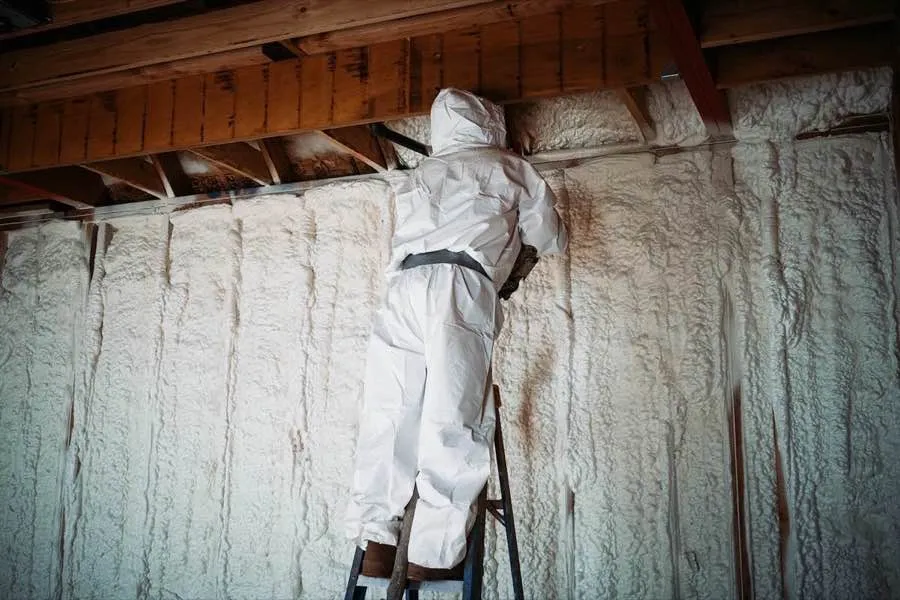
Controlled Expansion
High-expanding foam can damage door and window jambs if applied incorrectly. Our trained specialists know exactly how much foam to apply and which formulation to use in each situation.
Temperature Sensitive Chemistry
Cold temperatures affect the chemical reaction that causes foaming. Spray foam components must be kept within a specific temperature range for proper expansion and curing. We monitor conditions carefully to ensure optimal results.
Safety and Equipment
Professional spray foam application requires specialized equipment, proper ventilation, and personal protective gear. Our crews follow strict safety protocols to protect your home and family during installation.
Waste-Free Application
Inexperienced application leads to wasted material and messy results. Our fully trained specialists apply the right amount of foam the first time, minimizing waste and delivering a clean, professional finish.
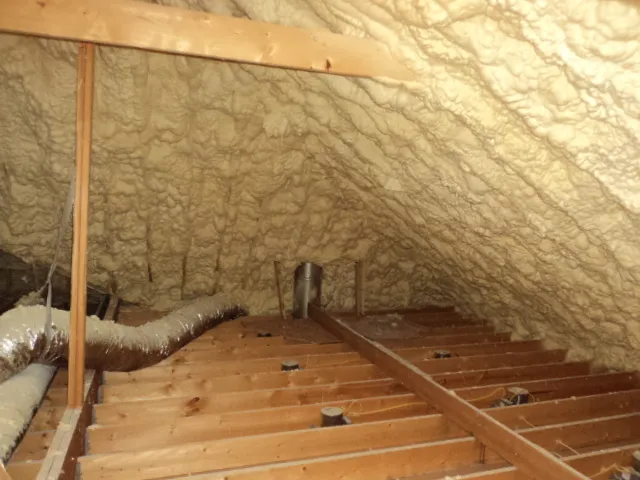
The Right Foam for Your Home
Not sure which spray foam product is right for your situation? We evaluate the area that needs insulating, assess moisture conditions, and recommend the foam type that delivers the best performance for your home.
Schedule a free home energy audit to get a complete picture of your home's insulation and air-sealing needs, or request an estimate for a specific area. We also offer blower door testing and thermal imaging to pinpoint exactly where your home is losing energy.
R-6.2+
Per Inch (Closed-Cell)
100%
Air Sealed
BPI
Certified Installers
Free
Estimates & Audits
Spray Foam Insulation Service Areas
NY Energy Project provides professional spray foam insulation services throughout New York City and the surrounding region. We are your trusted insulation contractor in Brooklyn, Queens, Staten Island, the Bronx, and Manhattan.


NY Energy Project is a BPI-certified contractor and participating contractor in NYSERDA's EmPower+ program.
Spray Foam vs. Other Insulation Types
See how closed-cell spray foam compares to other common insulation materials used in NYC homes.
| Feature | Closed-Cell Spray Foam | Fiberglass Batts | Cellulose | Rigid Foam |
|---|---|---|---|---|
| R-Value Per Inch | R-6.2+ | R-3.2 | R-3.7 | R-4 to R-6.5 |
| Air Sealing | Built-in | None | Partial | Requires taping |
| Moisture Resistance | Waterproof | Absorbs water | Absorbs water | Resistant |
| Settling Over Time | Never | Sags and compresses | Settles 10-20% | Never |
| Fills Gaps/Voids | Expands to fill all gaps | Common voids | Good coverage | Cut-to-fit |
| Structural Support | Adds rigidity | None | None | Some |
Spray Foam Insulation Questions
How much does spray foam insulation cost in NYC?
Spray foam insulation costs vary based on the type (open-cell vs. closed-cell), the area being insulated, and accessibility. Closed-cell spray foam costs more per square foot than open-cell but delivers nearly double the R-value per inch. NY Energy Project provides free estimates so you can compare options for your specific project. Many homeowners qualify for rebates through NYSERDA or the EmPower+ program that can significantly reduce out-of-pocket costs.
Is spray foam insulation worth it for older NYC homes?
Yes. Older homes in Brooklyn, Queens, and other NYC boroughs often have little or no insulation in their walls, attics, and basements. Spray foam is particularly effective in these homes because it air-seals and insulates simultaneously, addressing the drafts and energy loss that are common in pre-war and mid-century construction. Homeowners typically see 30-50% reductions in heating and cooling costs after spray foam installation.
What is the difference between open-cell and closed-cell spray foam?
Closed-cell spray foam is denser, delivers R-6.2+ per inch, and is completely waterproof. It adds structural rigidity and works best in basements, crawl spaces, and exterior applications. Open-cell spray foam is softer, delivers R-3.7 per inch, and allows some moisture vapor to pass through. It expands more and costs less per square foot, making it ideal for interior wall cavities and attic rafters where moisture resistance is less critical.
How long does spray foam insulation last?
Spray foam insulation lasts the lifetime of the building. Unlike fiberglass batts that sag and settle over time, or cellulose that can shift and compress, spray foam maintains its R-value and air-sealing properties indefinitely. Once cured, it does not degrade, settle, or lose insulating power.
Can spray foam insulation help with ice dams in NYC?
Yes. Ice dams form when heat escapes through the roof and melts snow unevenly. Spray foam applied to the underside of the roof deck creates a continuous thermal barrier that keeps heat inside and the roof deck cold. This prevents the uneven snowmelt that causes ice dams, which are common on older Brooklyn and Queens row houses.
Do you offer free spray foam insulation estimates in Brooklyn and Queens?
Yes. NY Energy Project provides free spray foam insulation estimates throughout Brooklyn, Queens, Manhattan, the Bronx, and Staten Island. We also offer a comprehensive home energy audit that includes blower door testing and thermal imaging to identify exactly where your home is losing energy before recommending insulation solutions.
Get a Free Spray Foam Insulation Estimate
Whether you need to insulate your attic, basement, crawl space, or rim joists, spray foam delivers superior performance in the toughest conditions. Call us or schedule online for a free estimate. We also offer a comprehensive home energy audit to diagnose the major contributors to your home's energy issues.
