
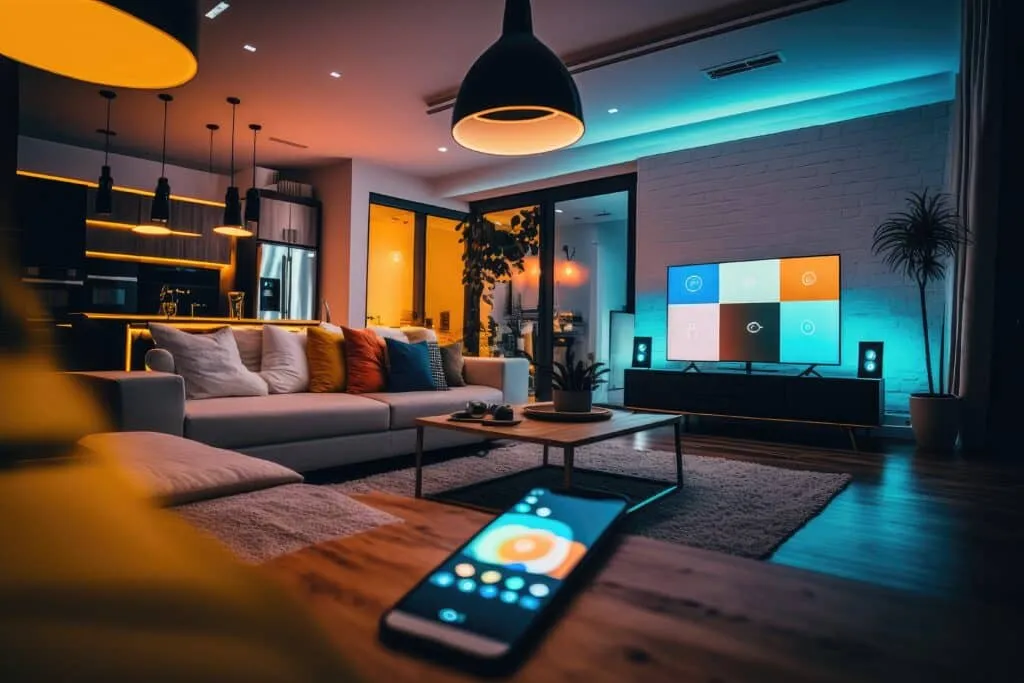
The concept of a smart home has evolved from science fiction to everyday reality. What was once a luxury reserved for tech enthusiasts and early adopters has become accessible to homeowners of all backgrounds. Smart home technology is transforming the way we interact with our living spaces, offering unprecedented levels of convenience, comfort, energy efficiency, and security.
Whether you live in a modern apartment in Manhattan or a classic brownstone in Brooklyn, smart home technology can be integrated into virtually any living space. In this guide, we will explore the key components of a smart home, the benefits they offer, and how these technologies are shaping the future of residential living.
Voice-Controlled Assistants
Voice-controlled assistants like Amazon Alexa, Google Assistant, and Apple Siri have become the central hub of many smart homes. These devices serve as the command center for your entire smart home ecosystem, allowing you to control lights, thermostats, locks, appliances, and entertainment systems using nothing but your voice.
The capabilities of voice assistants extend far beyond simple commands. They can set timers, play music, provide weather updates, read the news, make phone calls, and even help with cooking by reading recipes aloud. When integrated with other smart home devices, they become even more powerful. You can create custom routines that execute multiple actions with a single voice command. For example, saying "Good morning" could turn on the kitchen lights, start the coffee maker, adjust the thermostat, and read your daily calendar.
For families with children or elderly members, voice assistants offer an intuitive interface that does not require technical knowledge. Anyone who can speak can control the home. This accessibility makes smart home technology practical for the whole household, not just the tech-savvy members.
Smart Thermostats
Smart thermostats are one of the most impactful smart home devices you can install, particularly when it comes to energy savings. Products like the Nest Learning Thermostat, Ecobee, and Honeywell Home T9 go beyond simple programmable thermostats by learning your schedule, detecting occupancy, and automatically adjusting temperatures to maximize comfort while minimizing energy use.
A smart thermostat learns your daily patterns over time. It knows when you typically leave for work, when you come home, and what temperatures you prefer at different times of the day. It then creates an optimized heating and cooling schedule that keeps your home comfortable when you are there and saves energy when you are not. Many smart thermostats also include remote sensors that can be placed in different rooms, ensuring that the rooms you actually use are the ones being prioritized for comfort.
The energy savings from a smart thermostat can be significant. Studies have shown that smart thermostats can reduce heating and cooling costs by 10% to 15% on average. For New York City homeowners who spend $2,500 to $4,500 annually on heating alone, that translates to real money back in your pocket every year.
Of course, a smart thermostat works best when your home is properly insulated and air sealed. If your home has significant air leaks or inadequate insulation, your heating and cooling system has to work harder regardless of how smart the thermostat is. That is why we always recommend starting with a free home energy audit to identify and address any underlying efficiency issues before investing in smart home technology.
Intelligent Lighting
Smart lighting systems have come a long way from simple dimmer switches. Today's intelligent lighting solutions, including products from Philips Hue, LIFX, and Lutron, offer complete control over every aspect of your home's lighting. You can adjust brightness, change color temperature, set schedules, and create scenes that transform the ambiance of any room with a tap on your phone or a voice command.
One of the most practical benefits of smart lighting is the ability to create automated schedules. You can program your lights to gradually brighten in the morning to simulate a natural sunrise, dim in the evening to help you wind down, and turn off automatically when you leave the house. Motion sensors can trigger lights to turn on when you enter a room and off when you leave, eliminating the waste of lights being left on in empty rooms.
Smart lighting also contributes to energy efficiency. LED smart bulbs use a fraction of the energy of traditional incandescent bulbs, and the ability to dim and schedule them means you only use as much light as you actually need. Over the course of a year, these savings add up significantly, especially in larger homes with many light fixtures.
For security purposes, smart lighting can simulate occupancy when you are away from home. Lights can be programmed to turn on and off at random intervals, giving the appearance that someone is home even when the house is empty. This is a simple but effective deterrent against break-ins.
Home Security
Smart home security has revolutionized the way homeowners protect their properties. Modern security systems go far beyond the traditional alarm panels and offer a comprehensive, connected approach to home safety. Smart security cameras, video doorbells, smart locks, and integrated alarm systems work together to provide 24/7 monitoring and instant alerts directly to your smartphone.
Video doorbells like Ring and Nest Hello allow you to see, hear, and speak to anyone at your door from anywhere in the world. Whether you are at work, on vacation, or simply in another room, you can monitor your front door in real time. Smart locks let you grant temporary access to visitors, service providers, or delivery personnel without giving out physical keys. You can lock and unlock your door remotely, set auto-lock timers, and receive notifications whenever someone enters or exits.
Smart security cameras have become increasingly sophisticated, with features like facial recognition, motion zones, night vision, and cloud storage. Many systems can distinguish between people, animals, and vehicles, reducing false alerts. Some cameras even integrate with your smart lighting to automatically turn on exterior lights when motion is detected, adding another layer of deterrence.
For New York City homeowners, where property security is always a priority, smart security systems offer peace of mind that traditional systems simply cannot match. The ability to monitor your home in real time from your phone, combined with instant alerts and video evidence, provides a level of security that was previously only available through expensive professional monitoring services.
Smart Appliances
The kitchen and laundry room are being transformed by smart appliances that offer remote control, automation, and energy optimization. Smart refrigerators can track their contents, suggest recipes based on what you have available, and alert you when items are about to expire. Smart ovens can be preheated remotely and offer guided cooking programs that ensure perfect results every time.
Smart washing machines and dryers can be controlled from your phone, allowing you to start, stop, and monitor cycles from anywhere. Many smart appliances also include energy monitoring features that show you exactly how much electricity and water each cycle uses, helping you make more efficient choices. Some can even be programmed to run during off-peak hours when electricity rates are lower, further reducing your utility costs.
Robot vacuums like the iRobot Roomba and Roborock have become a staple of the smart home. These devices can be scheduled to clean on a regular basis, navigate around furniture and obstacles, and return to their charging station when finished. Many models can be controlled through voice assistants and integrated into your smart home routines.
Key Benefits of a Smart Home
The benefits of adopting smart home technology extend across every aspect of daily life. Here are the most significant advantages:
- Energy efficiency - Smart thermostats, lighting, and appliances work together to reduce energy waste. By automating heating, cooling, and lighting based on occupancy and schedules, a smart home can significantly lower your utility bills. Combined with proper insulation and air sealing, the savings multiply
- Convenience and comfort - Automate routine tasks, control your home remotely, and create personalized environments for different activities. Whether it is setting the perfect temperature before you arrive home or having your coffee ready when you wake up, smart homes adapt to your lifestyle
- Enhanced security - Monitor your home from anywhere, receive instant alerts about unusual activity, and control access to your property. Smart security systems provide comprehensive protection that adapts to your needs and gives you peace of mind whether you are home or away
- Accessibility - Smart home technology makes daily tasks easier for people with mobility challenges, disabilities, or age-related limitations. Voice control eliminates the need to physically interact with switches, locks, and appliances, making the home more accessible for everyone
- Increased property value - Homes equipped with smart technology are increasingly attractive to buyers. Smart thermostats, security systems, and energy-efficient features can increase your home's appeal and potentially its resale value
Challenges and Solutions
While the benefits of smart home technology are compelling, there are some challenges that homeowners should be aware of. Understanding these challenges and their solutions will help you make informed decisions about your smart home setup.
Compatibility
Not all smart devices work seamlessly with each other. Different manufacturers use different communication protocols, which can create compatibility issues. The solution is to choose devices that support common standards like Wi-Fi, Zigbee, Z-Wave, or the newer Matter protocol, which was specifically designed to unify smart home devices across manufacturers.
Privacy and Security
Connected devices collect data about your habits and routines, raising privacy concerns. To protect yourself, choose devices from reputable manufacturers that provide regular security updates. Use strong, unique passwords for all accounts, enable two-factor authentication where available, and keep your devices' firmware up to date.
Initial Cost
Building a comprehensive smart home can require a significant upfront investment. However, the costs have dropped considerably in recent years. Start with the devices that will have the biggest impact, such as a smart thermostat and smart lighting, and expand your system over time as budget allows. Many smart home devices also pay for themselves through energy savings.
Internet Dependency
Most smart home devices rely on a stable internet connection to function. If your internet goes down, some features may be unavailable. Look for devices that offer local processing and offline functionality as a backup. A reliable, high-speed internet connection with a quality router is the foundation of any smart home.
The Future of Smart Homes
The smart home industry is evolving rapidly, and the future holds exciting possibilities. Artificial intelligence and machine learning are making smart home devices more intuitive and predictive. Future systems will anticipate your needs before you even ask, automatically adjusting your environment based on subtle cues like the time of day, weather conditions, your location, and even your mood.
Energy management is becoming increasingly sophisticated. Smart homes of the future will integrate with solar panels, battery storage systems, and the electrical grid to optimize energy consumption in real time. Your home will automatically shift energy-intensive tasks to times when electricity is cheapest or when solar production is highest, maximizing savings and reducing your carbon footprint.
Health and wellness monitoring is another frontier. Smart homes will be able to monitor air quality, humidity, temperature, and even detect potential health issues through connected wearables and environmental sensors. For aging populations, smart home technology offers the possibility of aging in place safely and independently for longer.
The integration of smart home technology with home energy improvements creates a particularly powerful combination. A home that is properly insulated, air sealed, and equipped with smart technology can achieve remarkable levels of comfort and efficiency. At NY Energy Project, we help homeowners lay the groundwork for a smart, efficient home by ensuring the building envelope is performing at its best. Visit our smart home services page to learn more about how we can help you get started.
Ready to Make Your Home Smarter and More Efficient?
NY Energy Project is a BPI Gold Star certified, NYSERDA EmPower+ participating contractor serving Brooklyn, Queens, Manhattan, the Bronx, and Staten Island. We combine smart home technology with professional energy improvements to create homes that are comfortable, efficient, and connected.
